

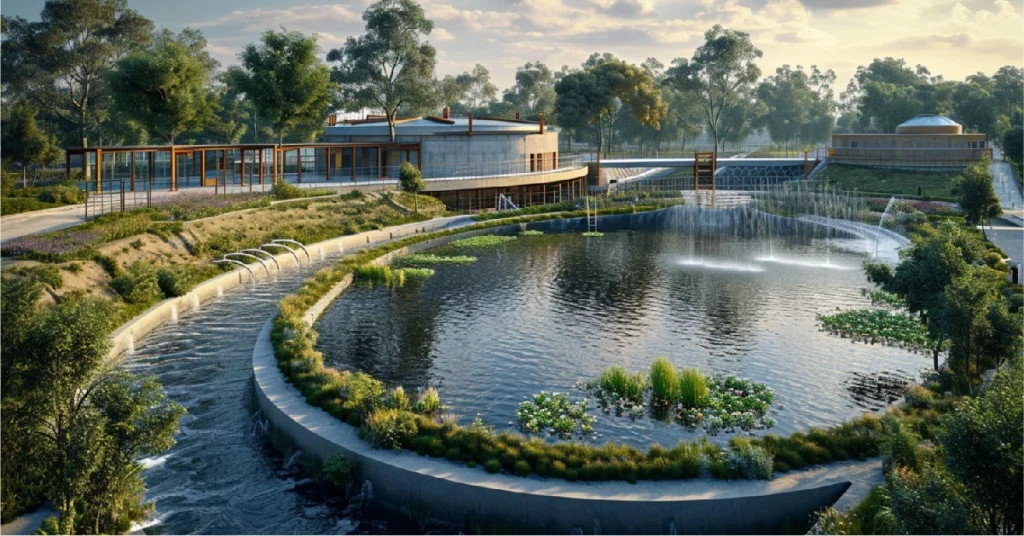
Industrial facilities generate wastewater containing organic matter, suspended solids, chemicals, oils, dissolved salts, and other contaminants. Simply treating this wastewater for discharge can address compliance requirements, but recovering it for reuse can provide an additional benefit.
ETP plants in Bangladesh can help industries treat effluent to the required quality and, where suitable, further process the treated water for reuse. This can reduce freshwater dependency, improve resource efficiency, and support more sustainable industrial operations.
What Is an ETP Plant?
An Effluent Treatment Plant (ETP) is designed to treat wastewater generated by industrial processes before it is discharged or reused.
Industrial effluent can contain different contaminants depending on the manufacturing process. Pharmaceutical, textile, chemical, food and beverage, and other industries may therefore require different treatment configurations.
A typical ETP may include:
- Preliminary treatment
- Equalisation
- Chemical treatment
- Biological treatment
- Filtration
- Advanced membrane treatment
The final treatment configuration depends on wastewater characteristics and the required treated-water quality.
Why Water Reuse Matters for Industries in Bangladesh?
Freshwater is an important resource for industrial operations, but many processes do not necessarily require fresh water at every point of use.
Treated wastewater can potentially be recovered for suitable applications, helping industries:
- Reduce freshwater consumption
- Lower water procurement requirements
- Improve resource efficiency
- Reduce wastewater discharge
- Support sustainability objectives
The source material identifies cost savings through water recycling, freshwater savings, sustainability benefits, and resource recovery through reuse of treated water in industrial operations.
How ETP Plants Enable Water Reuse?
Water reuse begins with effective treatment of industrial effluent.
A typical treatment pathway is:
Industrial effluent → Primary treatment → Biological treatment → Tertiary treatment → Recovered water → Industrial reuse
-
Primary Treatment
Screening, sedimentation, and other physical processes remove larger solids and suspended matter.
-
Biological Treatment
Biological processes use microorganisms to reduce biodegradable organic pollutants such as BOD and COD.
Technologies can include:
- Activated sludge
- MBBR
- SBR
- MBR
-
Tertiary Treatment
Where higher-quality reuse is required, additional treatment can include filtration, disinfection, membranes, or reverse osmosis.
The treatment level should always be determined by the quality required for the intended reuse application.
What Water Can Be Reused After ETP Treatment?
The suitability of treated effluent for reuse depends on the treatment achieved and the intended application.
Potential applications include:
-
Cooling
Treated water can be further processed for use in cooling systems where the required water quality can be achieved.
-
Cleaning and Utilities
Recovered water can be considered for suitable cleaning and utility applications.
-
Gardening and Landscaping
Where appropriate quality requirements are met, treated water can be reused for landscaping and irrigation.
-
Industrial Processes
With additional treatment such as membrane filtration or RO, recovered water may be suitable for selected industrial processes.
The objective is to match treated-water quality with the specific application rather than assuming that all treated effluent can be reused everywhere.
Technologies Used in ETP Plants for Water Reuse
The right technology combination depends on the industry’s wastewater characteristics and reuse target.
-
MBBR Technology
Moving Bed Biofilm Reactor technology uses biofilm carriers to improve biological treatment and can be incorporated into industrial wastewater treatment systems.
-
SBR Technology
Sequencing Batch Reactor technology combines biological treatment and settling in a batch process and can provide flexibility for varying wastewater loads.
-
MBR Technology
Membrane Bioreactor technology combines biological treatment with membrane filtration to produce high-quality treated effluent.
This can be useful where treated water needs to undergo further purification for reuse.
-
Reverse Osmosis
RO provides advanced removal of dissolved salts and other impurities and can be used where higher-quality recovered water is required.
-
ZLD Systems
Zero Liquid Discharge systems integrate technologies such as RO, evaporation, and crystallisation to maximise water recovery and eliminate liquid discharge where required.
How Can Water Reuse Reduce Industrial Costs?
The financial benefit of an ETP is not limited to avoiding pollution-related liabilities.
-
Lower Freshwater Consumption
When treated wastewater replaces fresh water for suitable applications, the facility can reduce its dependence on external freshwater sources.
-
Reduced Wastewater Disposal
Recovering water from effluent can reduce the volume of wastewater requiring discharge or disposal.
-
Better Resource Utilisation
Instead of treating water as a waste stream, industries can recover it and return it to appropriate parts of the operation.
-
Improved Long-Term Water Efficiency
A well-designed recycling system can become part of the facility’s broader water-management strategy.
Actual savings depend on freshwater prices, wastewater volumes, treatment costs, reuse requirements, and the proportion of treated water that can be recovered.
Industries That Can Benefit From ETP-Based Water Reuse
Different industries face different wastewater challenges.
-
Textiles
Textile facilities can generate dye-laden effluent requiring chemical and biological treatment before further reuse.
-
Pharmaceuticals
Pharmaceutical wastewater can contain complex chemical contaminants and requires treatment based on its specific characteristics.
-
Food & Beverage
Organic-rich wastewater can require biological treatment before the water is considered for further purification and reuse.
-
Chemicals
Chemical industries can generate high-TDS and other complex effluents requiring specialised treatment.
-
Power
Power plants use large volumes of water, particularly for cooling, making wastewater recovery and recycling an important consideration.
The source material specifically identifies pharmaceuticals, textiles, food and beverage, power, and chemical industries among sectors requiring wastewater treatment.
Factors to Consider When Selecting an ETP Plant in Bangladesh
Selecting an effluent treatment plant in Bangladesh should begin with the actual wastewater and reuse requirements.
-
Wastewater Flow
Daily and peak wastewater generation determines the required treatment capacity.
-
Effluent Characteristics
Parameters such as BOD, COD, TSS, pH, TDS, chemicals, and other contaminants influence the treatment configuration.
-
Required Reuse Quality
The intended application determines how far the treated water needs to be purified.
-
Available Space
The available plant footprint can influence technology selection, particularly where compact treatment systems are required.
-
ZLD Requirement
Industries with specific discharge restrictions or water-recovery objectives may need to evaluate ZLD as part of their overall treatment strategy.
-
Operating Costs
Energy, chemicals, sludge handling, membrane replacement, maintenance, and freshwater savings should all be considered when evaluating the overall economics of the system.
Ion Exchange ETP and Water Recycling Solutions in Bangladesh
Ion Exchange provides integrated industrial wastewater treatment and water recycling solutions using biological, membrane, and advanced treatment technologies.
Its wastewater treatment capabilities include:
- ETP systems
- Biological treatment
- MBBR and SBR
- MBR
- RO and membrane treatment
- Water recycling
- ZLD solutions
Ion Exchange’s documented approach is to integrate and optimise biological, membrane, and filtration technologies according to the requirements of individual wastewater treatment systems.
The company’s project experience also includes water treatment solutions for the Maitree power project in Bangladesh, where Ion Exchange supplied condensate polishing units along with pretreatment and demineralisation systems to support high-quality water for power generation.
For industries evaluating ETP plant cost savings, the right approach is therefore to assess both treatment performance and the potential value of recovered water.
Conclusion
ETP plants can do more than treat industrial wastewater for discharge. When designed around water recovery, they can help industries reduce freshwater consumption, reuse treated effluent, improve resource efficiency, and support sustainable operations.
The right ETP plant in Bangladesh should therefore be selected according to wastewater characteristics, required reuse quality, plant capacity, available space, and long-term operating economics.
Connect with Ion Exchange experts for customised ETP, wastewater recycling, and industrial water reuse solutions designed around your facility’s requirements in Bangladesh.
FAQs
-
What is an ETP plant?
An Effluent Treatment Plant treats industrial wastewater to remove contaminants before the treated water is discharged or reused.
-
Can ETP plants help industries reduce freshwater consumption?
Yes. Treated effluent can be further purified and reused for suitable industrial, utility, cooling, cleaning, or other applications, reducing dependence on fresh water.
-
What technologies are used for ETP-based water recycling?
Depending on the wastewater and reuse requirement, systems may use biological treatment, MBBR, SBR, MBR, filtration, RO, and ZLD technologies.
-
What factors affect ETP plant cost savings?
Savings depend on wastewater volume, freshwater cost, treatment and operating costs, reuse potential, energy and chemical consumption, and the amount of treated water that can be recovered.
-
Can treated ETP water be reused in industrial processes?
Yes, where the treated water meets the quality required for the intended process. Additional treatment such as membrane filtration or RO may be needed for higher-quality reuse.