Author name: ionexchange

Wastewater Treatment

Flocculants in Water Treatment: Types & Selection Guide

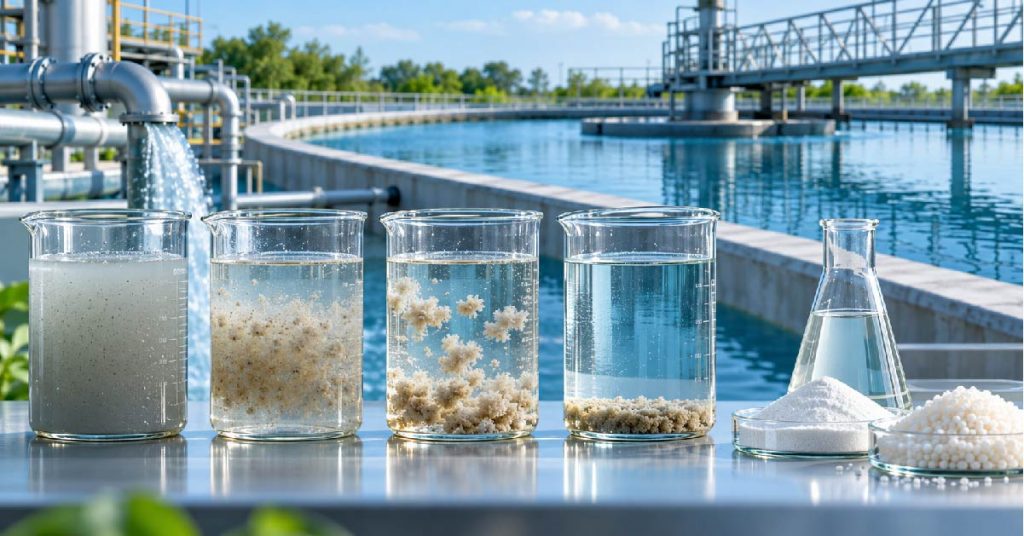
A treatment plant rarely moves from stable operation to poor performance overnight. The warning signs tend to appear gradually. Settling takes longer. Clarifier overflow is not as clear as it used to be. Filters need attention more often, or sludge that was easy to handle suddenly becomes troublesome. Normally, one would start off by checking

Flocculants in Water Treatment: Types & Selection Guide Read More »
ETP Plant

How to Choose an ETP Plant for Textile Industry in Bangladesh

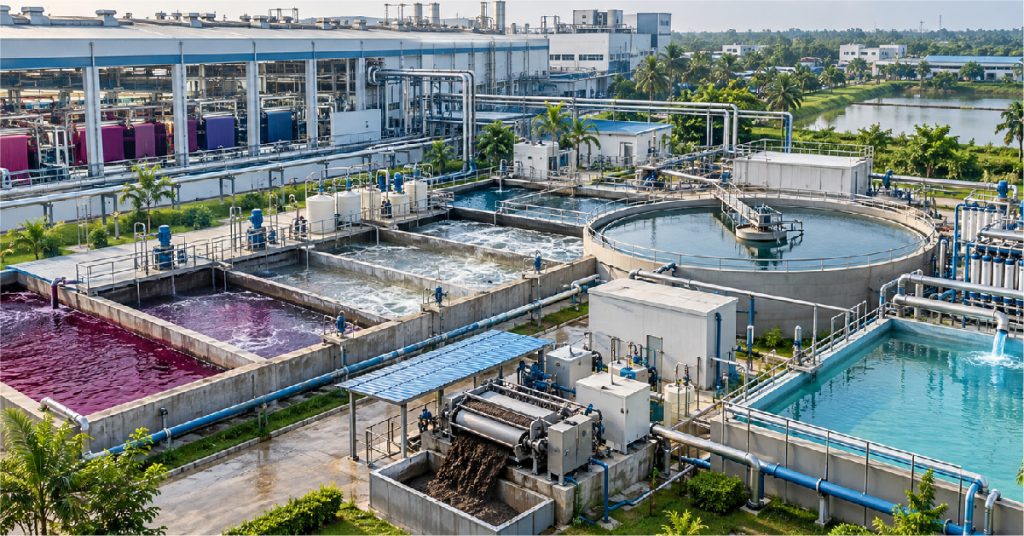
Bangladesh’s textile and ready-made garment sector is the backbone of the country’s export economy. In FY2024–25, ready-made garments alone contributed about 81.5% of Bangladesh’s total merchandise exports. But behind every dyeing, washing, printing and finishing operation is another reality: wastewater loaded with dyes, chemicals, salts, suspended solids and organic contaminants. That makes choosing the right

How to Choose an ETP Plant for Textile Industry in Bangladesh Read More »

ETP plants in Bangladesh

How Do ETP Plants Support Water Reuse and Cost Savings in Bangladesh?

Industrial facilities generate wastewater containing organic matter, suspended solids, chemicals, oils, dissolved salts, and other contaminants. Simply treating this wastewater for discharge can address compliance requirements, but recovering it for reuse can provide an additional benefit. ETP plants in Bangladesh can help industries treat effluent to the required quality and, where suitable, further process the

How Do ETP Plants Support Water Reuse and Cost Savings in Bangladesh? Read More »

Effluent Treatment Plants for Bangladesh

A Complete Guide to Effluent Treatment Plants for Bangladesh Industries

Industrial growth in Bangladesh has increased the demand for reliable wastewater management solutions across sectors such as textiles, garments, pharmaceuticals, chemicals, food processing, and manufacturing. Industrial processes generate wastewater containing dyes, chemicals, oils, heavy metals, organic pollutants, and suspended solids. If untreated, this wastewater can impact water bodies, ecosystems, and public health. An effluent treatment

A Complete Guide to Effluent Treatment Plants for Bangladesh Industries Read More »

industrial waste management system

Integrated Waste Management System: A Complete Industry Guide

As Bangladesh continues to expand its industrial base, effective waste management has become a critical component of sustainable development. Manufacturing facilities, food processing units, textile mills, pharmaceutical, chemical plants, and commercial establishments generate significant quantities of solid and liquid waste every day. Without proper management, these waste streams can impact environmental quality, public health, and

Integrated Waste Management System: A Complete Industry Guide Read More »

wastewater treatment company

Sewage Treatment Plants in Bangladesh With Advanced Technologies

Bangladesh is witnessing rapid urbanization, industrial growth, and increasing population density, creating significant pressure on existing water and sanitation infrastructure. As cities expand and industrial activities increase, managing sewage and wastewater efficiently has become essential for protecting public health, preserving water resources, and maintaining environmental sustainability. Modern Sewage Treatment Plants are now playing a critical

Sewage Treatment Plants in Bangladesh With Advanced Technologies Read More »

Wastewater Discharge vs Reuse: Standards and Impact on Water Resources

Bangladesh is facing increasing pressure on its Water Resources due to rapid urbanization, industrial growth, and population expansion. Large volumes of wastewater are generated daily from industries, municipalities, and agriculture. Managing this wastewater effectively through proper Wastewater management is essential to protect the environment and ensure long-term water availability. A key challenge lies in deciding

Wastewater Discharge vs Reuse: Standards and Impact on Water Resources Read More »

water supply

Sustainable Groundwater Management: Making the Invisible Visible

Groundwater plays a crucial role in supporting Bangladesh’s water needs. A significant portion of the population depends on groundwater supply for drinking water, agriculture, and industrial operations. However, increasing water demand, rapid urbanization, and environmental pressures are placing considerable stress on the groundwater system. Effective Groundwater Management has therefore become essential to maintain a reliable

Sustainable Groundwater Management: Making the Invisible Visible Read More »

water and energy recovery

Integrated Wastewater Management for Water and Energy Recovery

Bangladesh’s rapid industrialization and urban growth are placing unprecedented pressure on water resources, energy supply, and environmental systems. Industries across textiles, chemicals, food processing, pharmaceuticals, and power generation generate large volumes of wastewater—traditionally treated only to meet discharge norms. Today, this approach is no longer sufficient. Integrated wastewater management is emerging as a transformative strategy—one

Integrated Wastewater Management for Water and Energy Recovery Read More »